PhD position - September 2027
Our laboratory is looking for an additional PhD student to start in September 2027 to work on cell biology problems related to synthesis and intracellular trafficking of coenzyme Q in a variety of cellular and organismal systems.
Canadian and French applicants need to have at least a 3.6 CGPA as well as demonstrated experience in wet lab work.Other international applications need at least a demonstrated 3.9 CGPA as verified by McGill University. This is because they have to be eligible for a competitive foreign fee waiver from the Department of Biology. Demonstrated wet lab experience is also a strong plus.
Any candidate with their own source of funding will receive a top up in addition to the funding they have secured. Private funding is not considered.
Please apply directly to: siegfried.hekimi@mcgill.ca
Dr. siegfried hekimi

Siegfried Hekimi is from Geneva, Switzerland, and obtained his undergraduate and graduate degrees in Biology at the University of Geneva. After a successful career as a professional cyclist, he obtained his PhD with Prof. Michael O’Shea, and then moved to the famed Laboratory of Molecular Biology (LMB) of the Medical Research Council in Cambridge, UK, to collaborate with Dr J.G. White as a post-doctoral fellow of the Swiss National Science Fund. It is at the LMB where Hekimi developed his interest for using 'the worm' for translational studies in the biology of aging. It is also in Cambridge that he identified clk-1, one of the first mutants that helped to demonstrate that aging could be manipulated genetically, and which helped to demonstrate that inducing mild mitochondrial dysfunction and boost ROS signaling could slow down the aging process of animals. In 1992 he joined McGill University where he has been a full professor since 2004.
Visit Dr. Hekimi's Google Scholar Profile
Photo Album of Dr. Hekimi's Cycling Career
Research
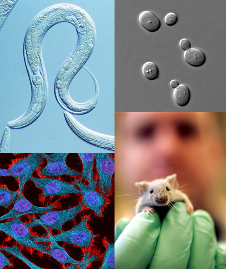
We are using mutants of the microscopic nematode roundworm Caenorhabditis elegans, Saccharomyces cerevisiae, mice, and human cells to study aging, a crucial, profound, and poorly understood biological phenomenon. We hope to obtain insights that will also provide new ways for medical intervention on the aging process. We are particularly focusing on gene activities that affect mitochondrial function, and on mutants that enhance longevity. We are also interested in the biosynthesis and function of ubiquinone (UQ, Coenzyme Q, CoQ), the lipid-like the mitochondrial respiratory chain electron transporter. Here too we use mutants in both organisms to unravel the basic biochemical functions of ubiquinone and to develop drugs that can help alleviate the diseases linked to ubiquinone deficiency.
Publications
Wang Y, Noe A, Truong-Ong L, Hekimi S. (2026)
Clarifying the molecular mechanisms underlying the lethal in vitro cellular effects and mild organismal phenotype of SOD1 loss. Scientific Reports.
Lilienfeldt N, Tai Y, Sun H, Waddell B, Branicky R, Yang W, Hekimi S. (2026)
Genetic analysis of sensitivity to temperature fluctuations identifies acclimation stress as a novel type of cellular stress in Caenorhabditis elegans. Genetics. iyag157.
Wang Y, Hekimi S (2025)
Elevated cellular accumulation of endogenous and exogenous CoQ by altered intracellular trafficking. Journal of Biological Chemistry 301(12).
Pascal M, Cappadocia L, Hekimi S, Benard CY. (2025)
Intragenic suppressors of the C. elegans clk-2(qm37) mutation. Micropublication Biology. 10.17912/micropub.biology.001828.
Wang Y, Lilienfeldt N, Hekimi S. (2024)
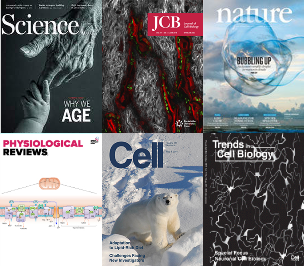
Understanding coenzyme Q. Physiological Reviews 104(4): 1533-1610.
THE LAB
The laboratory is located in the Francesco Bellini Life Sciences Complex on William Osler Street in the west part of the McGill campus. It is near the metro station Peel Map. The Francesco Bellini Life Sciences Building accommodates scientists from biology, biochemistry and physiology.
CONTACT
Dr. Hekimi: siegfried.hekimi@mcgill.ca
Research Associates:
robyn.branicky@mcgill.ca (worms)
ying.wang10@mcgill.ca (mice)
Department of Biology, McGill University
Bellini Life Sciences Complex
3649 Promenade Sir William Osler
Montreal, Quebec H3G 0B1